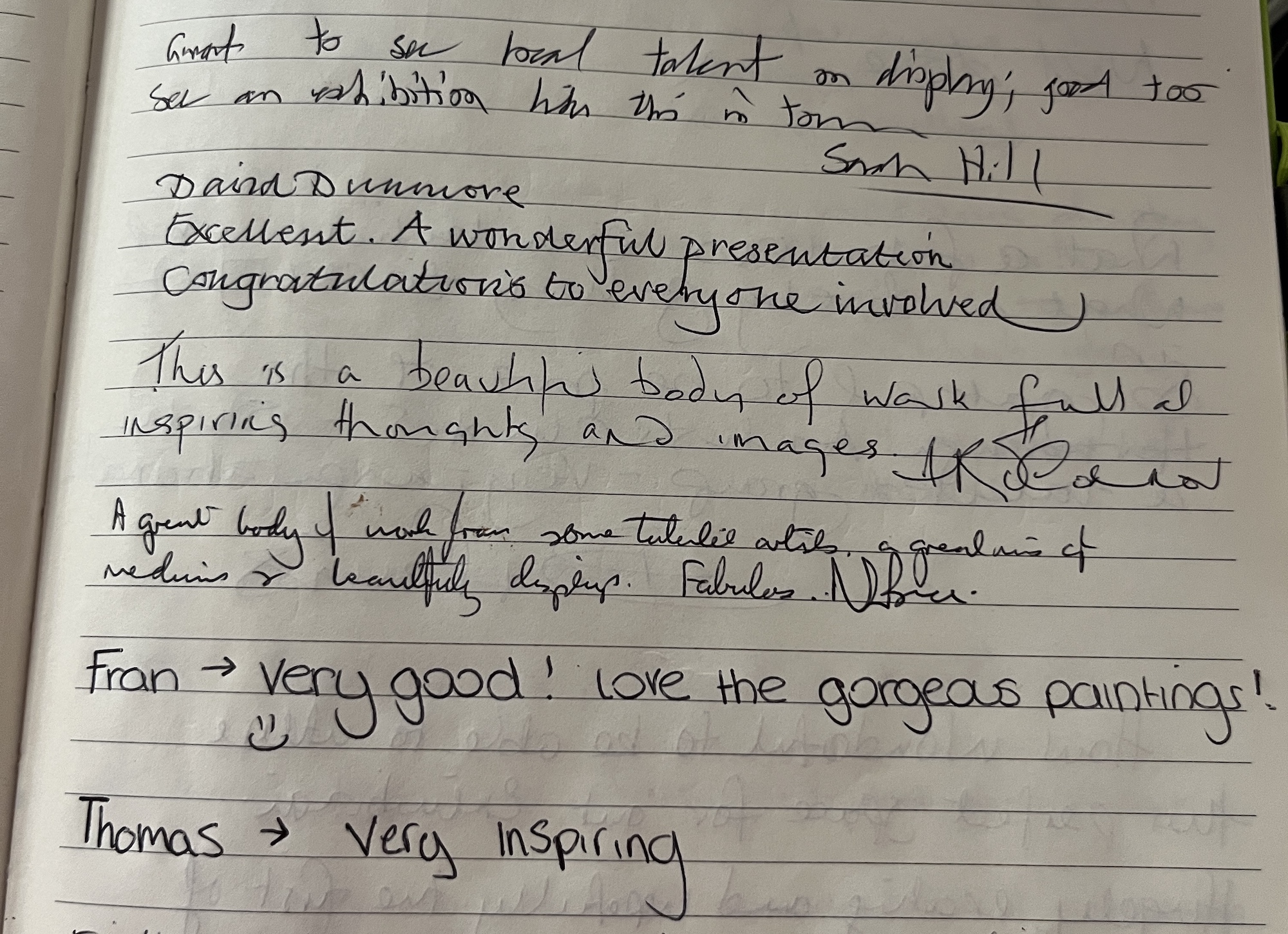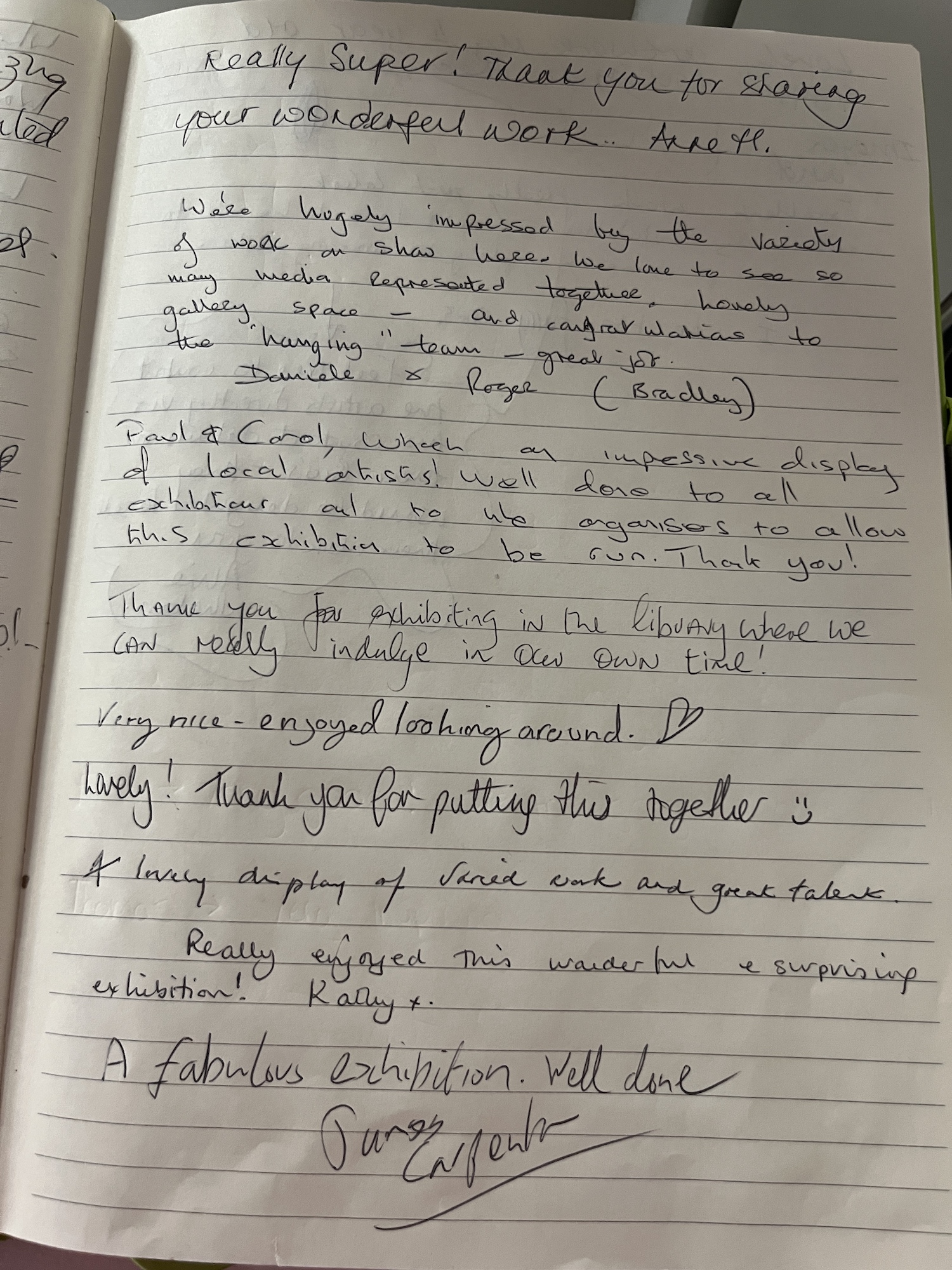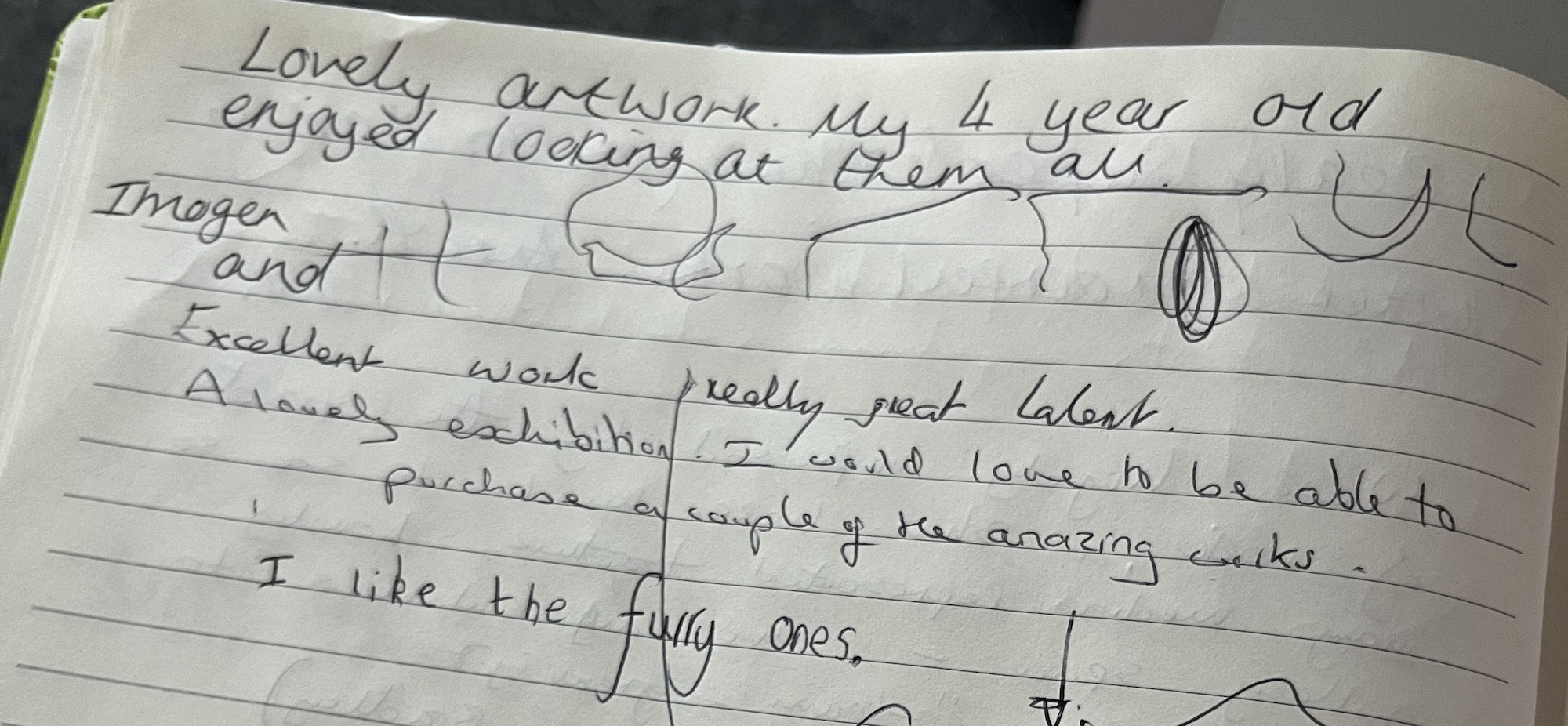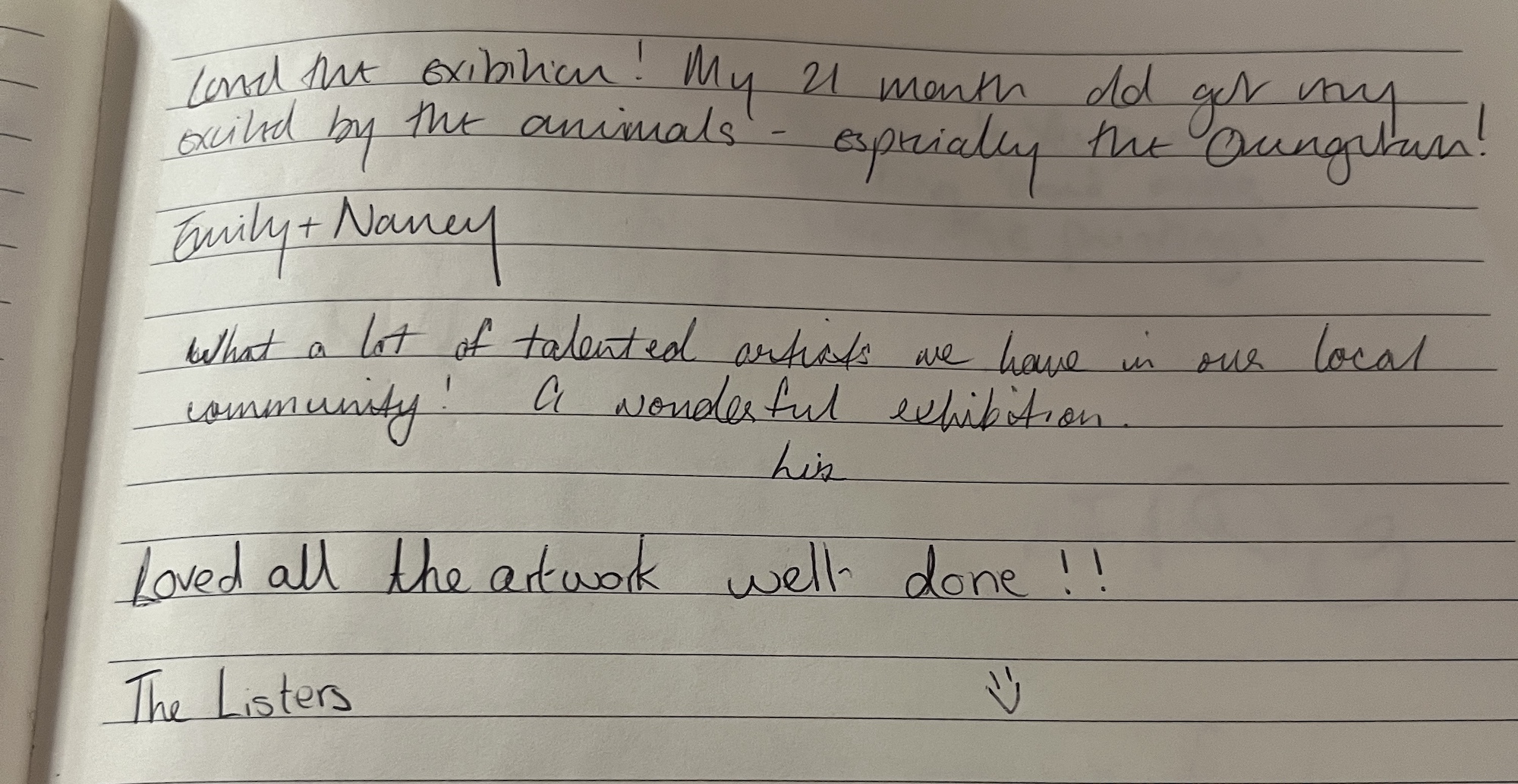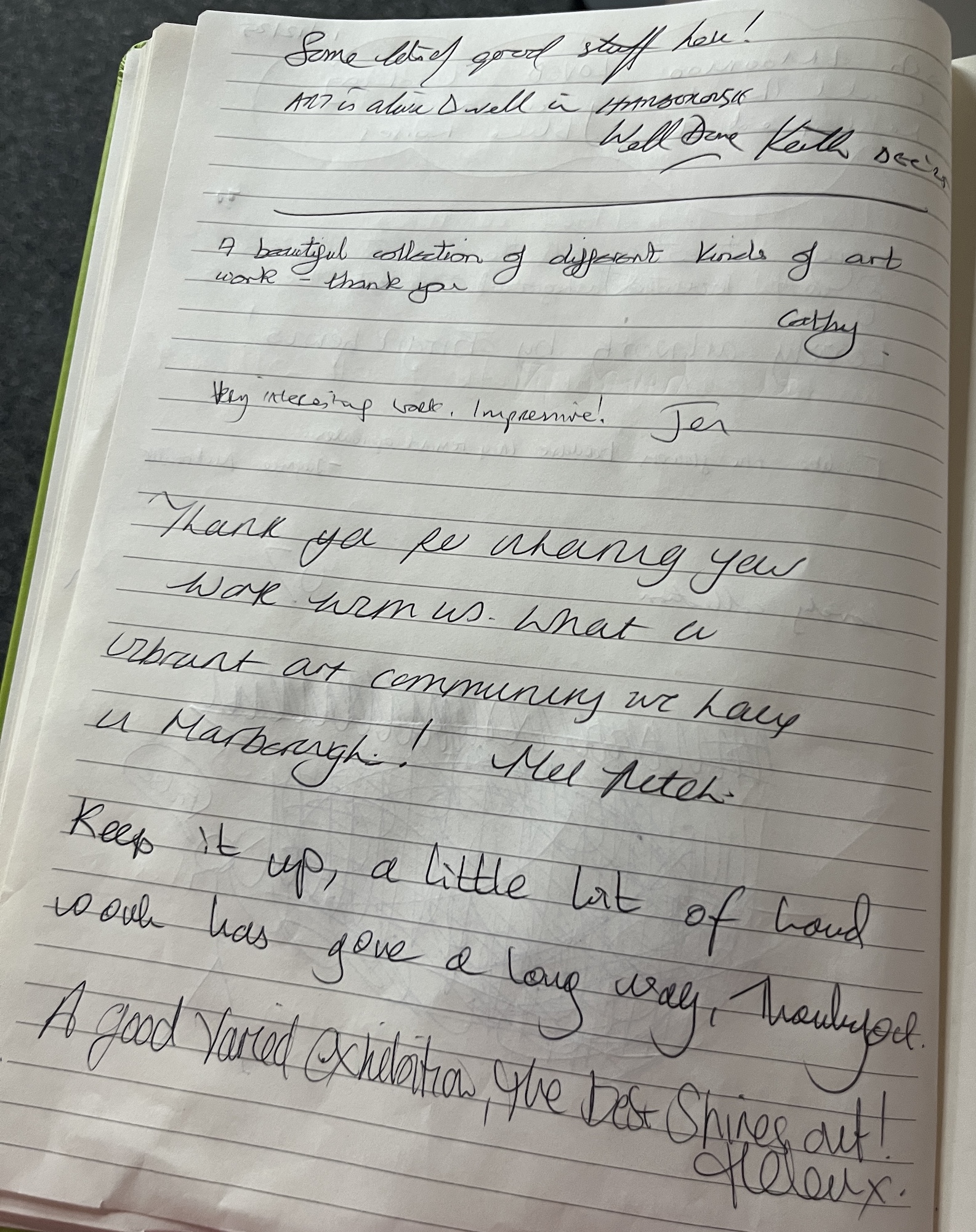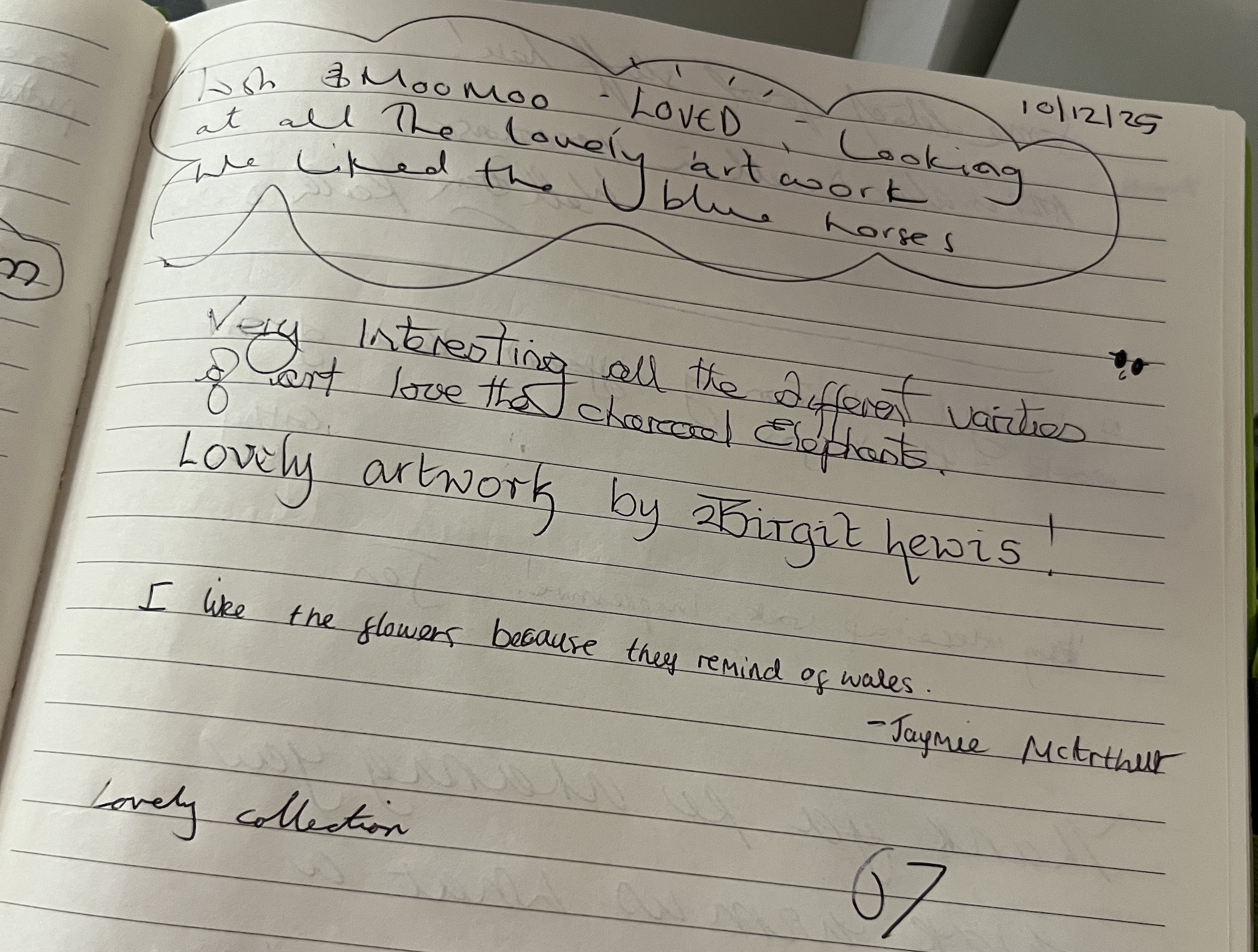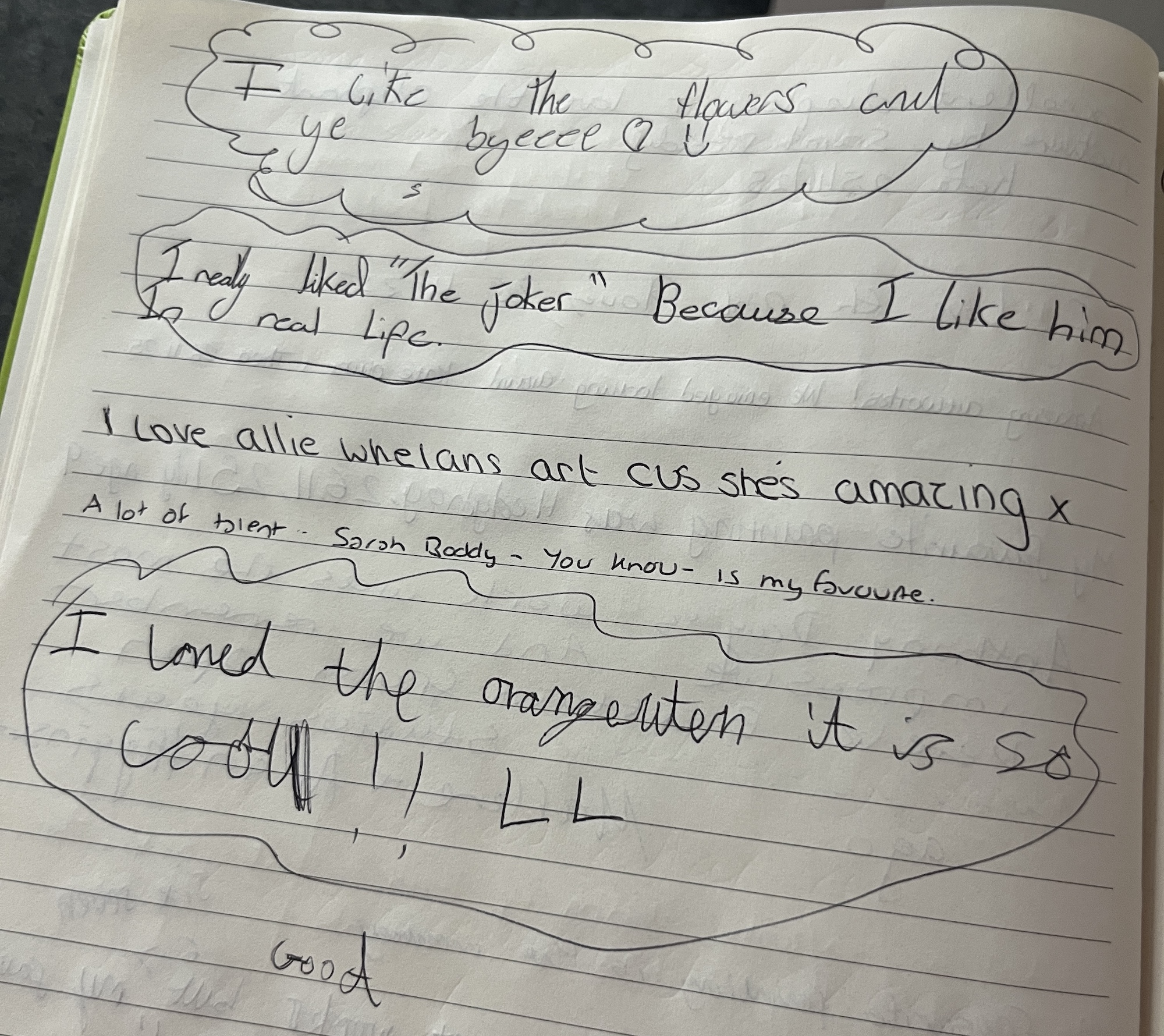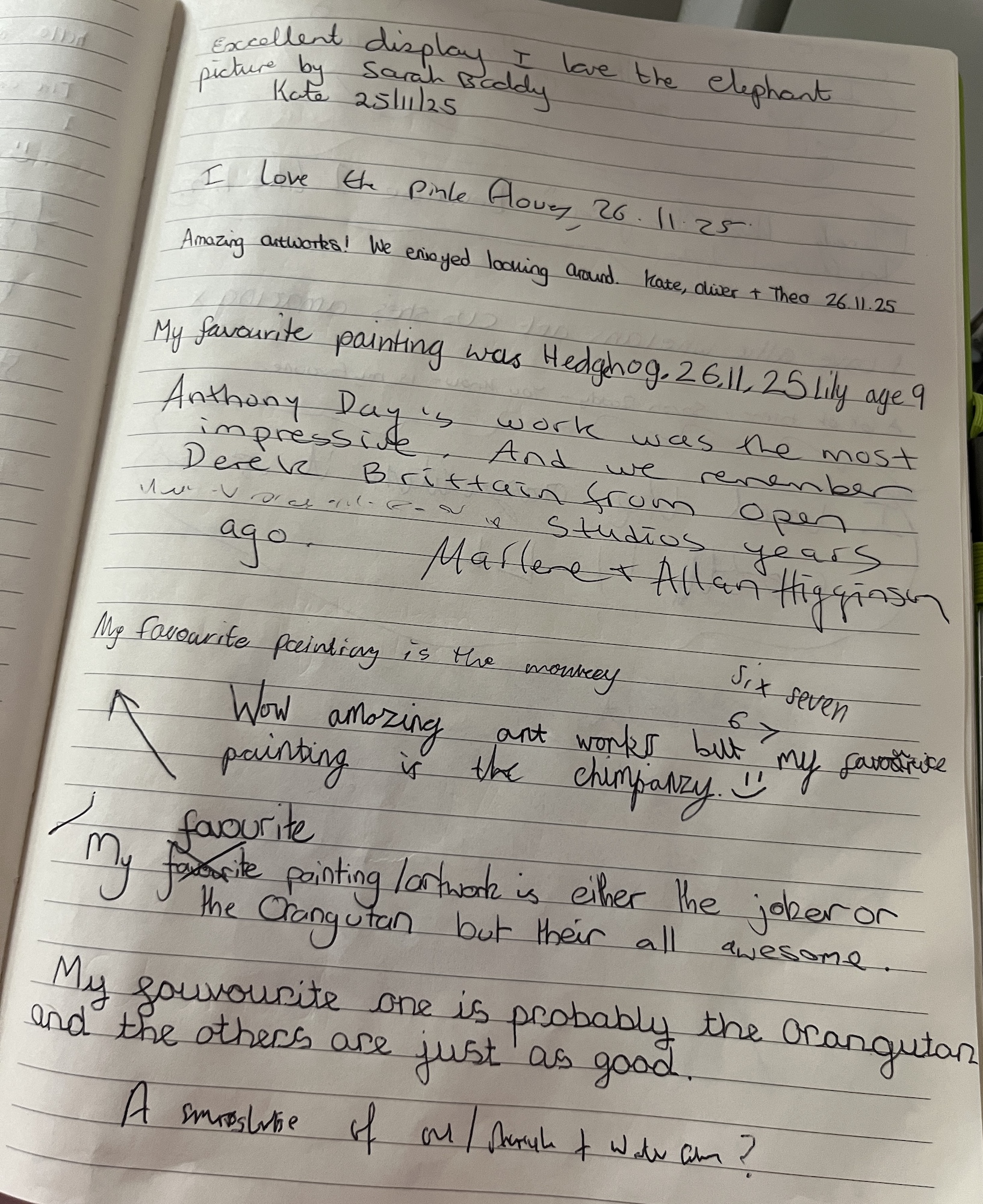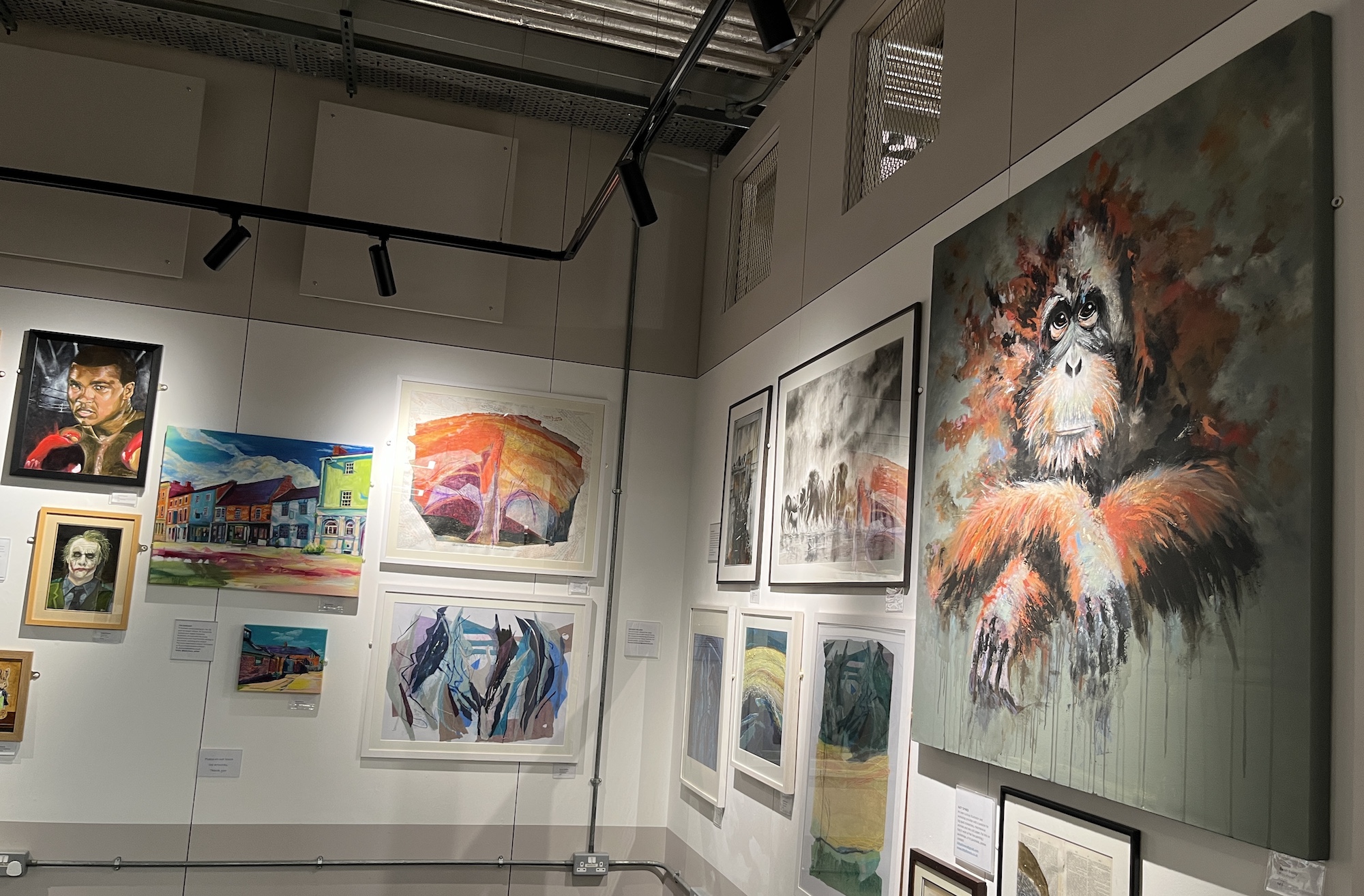
Now that the doors have closed on our Symington’s Exhibition, it feels like the right moment to pause, look back, and smile. Success can be measured in many ways — footfall, sales, website traffic, social media reach — but this time, the real story revealed itself quietly, page by page, in the guest book.
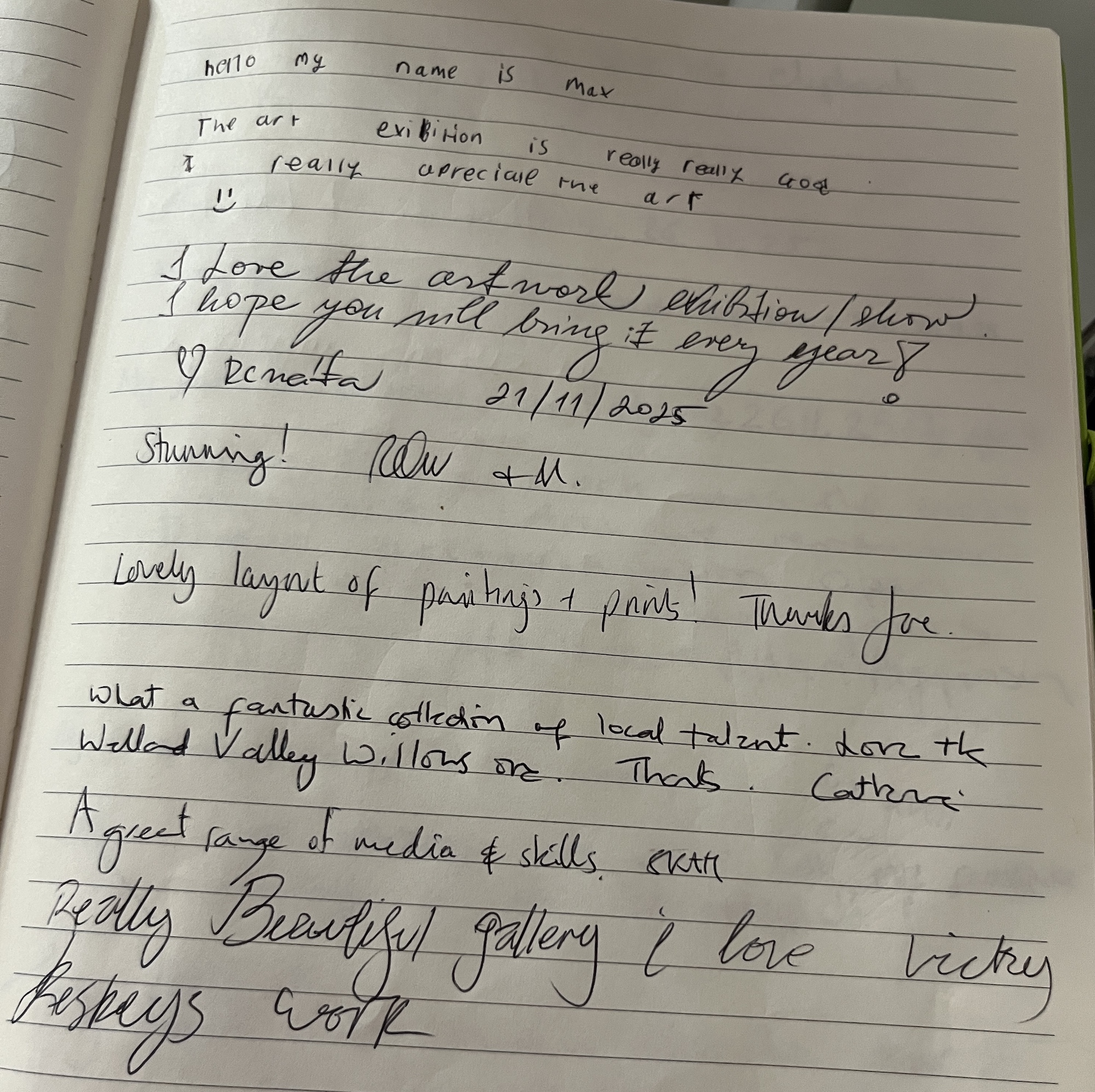
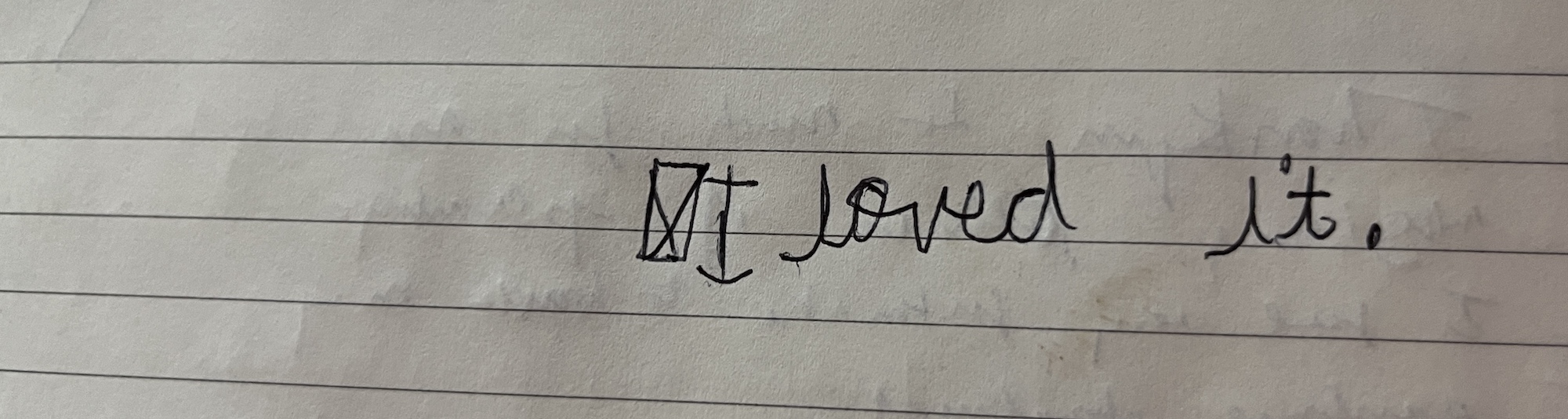
If ever there was proof that art matters locally, emotionally, and across generations, it was written in biro, careful cursive, wobbly handwriting, and the occasional enthusiastic scrawl. The guest book didn’t just record reactions — it became part of the exhibition itself.
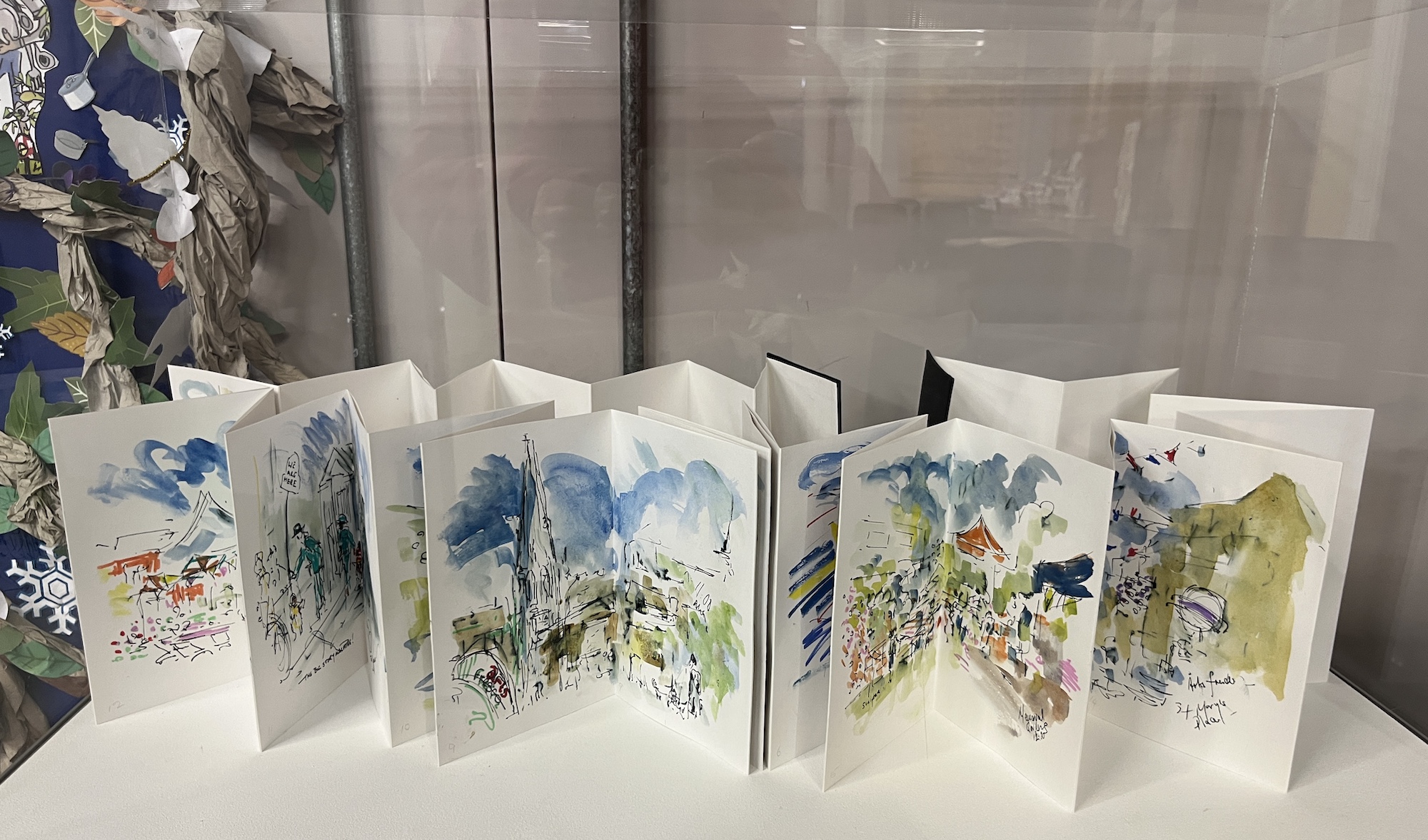
What emerged most strongly was a sense of genuine affection. Not polite approval. Not vague praise. Actual love. That word cropped up again and again. Love for the work. Love for the variety. Love for seeing such a strong, visible creative presence in the town (And quite rightly so with Valentine’s around the corner!)
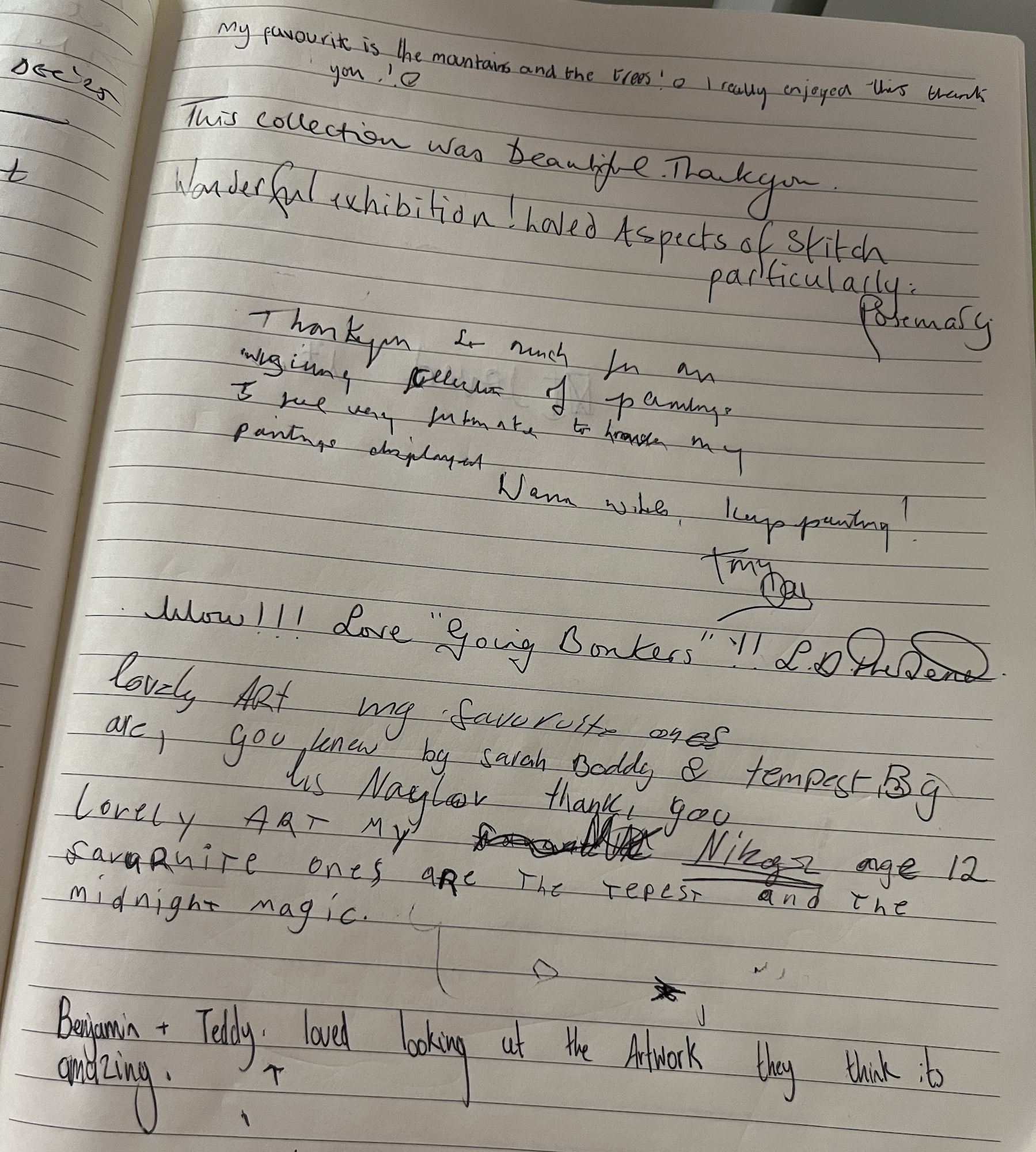
And yes — we have to talk about Sarah Boddy’s Orangutan (NFS). The evidence is overwhelming. It became something of a phenomenon, especially with younger visitors. Children named it’s animal type, ranked it (against other work), and declared it their favourite with complete confidence. We even appeared to be accidentally “on trend”, with multiple entries recording “6. 7.” in the book — a cultural mystery for the younger “TikTok” generation we’re happy to embrace.
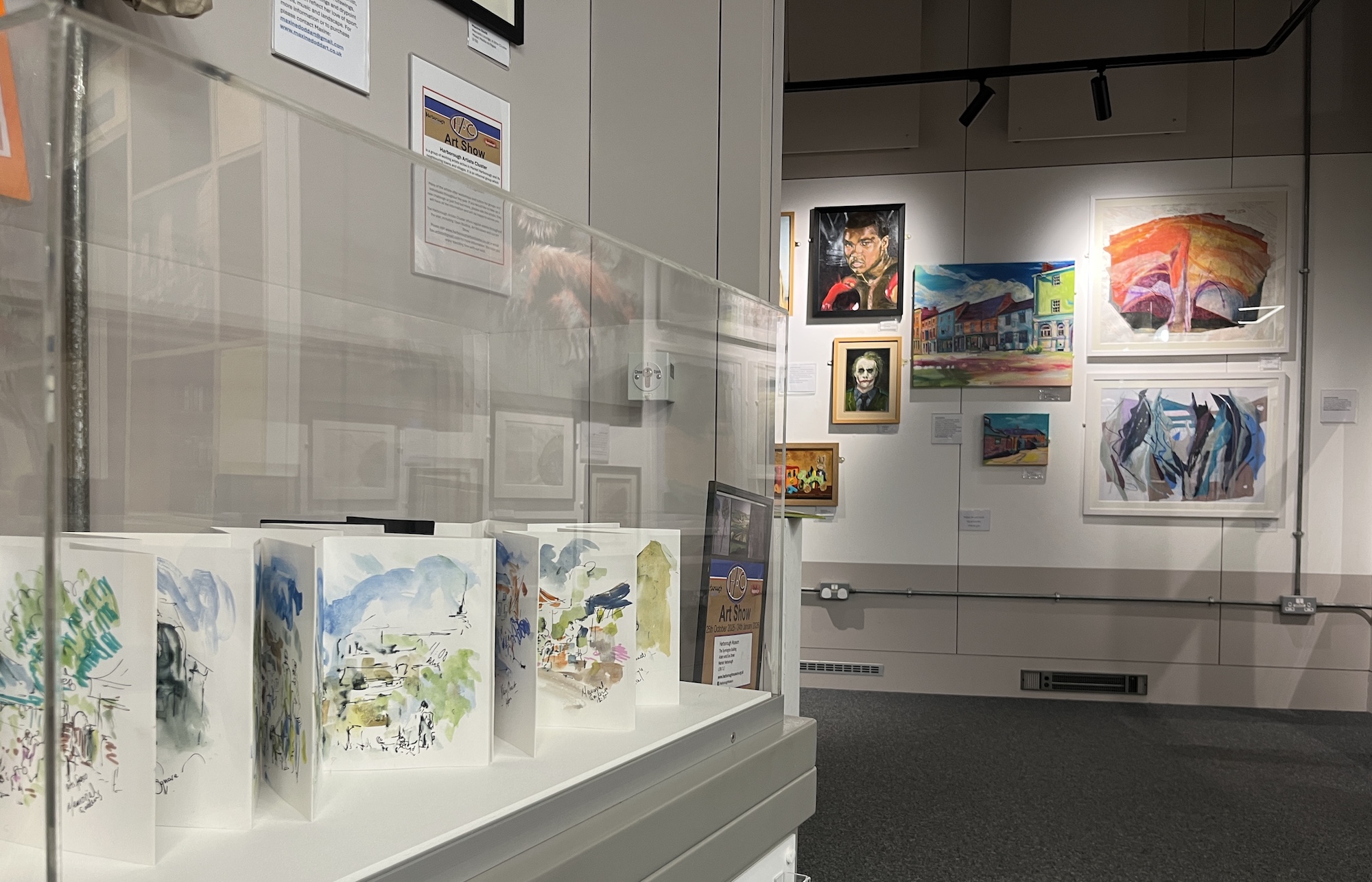
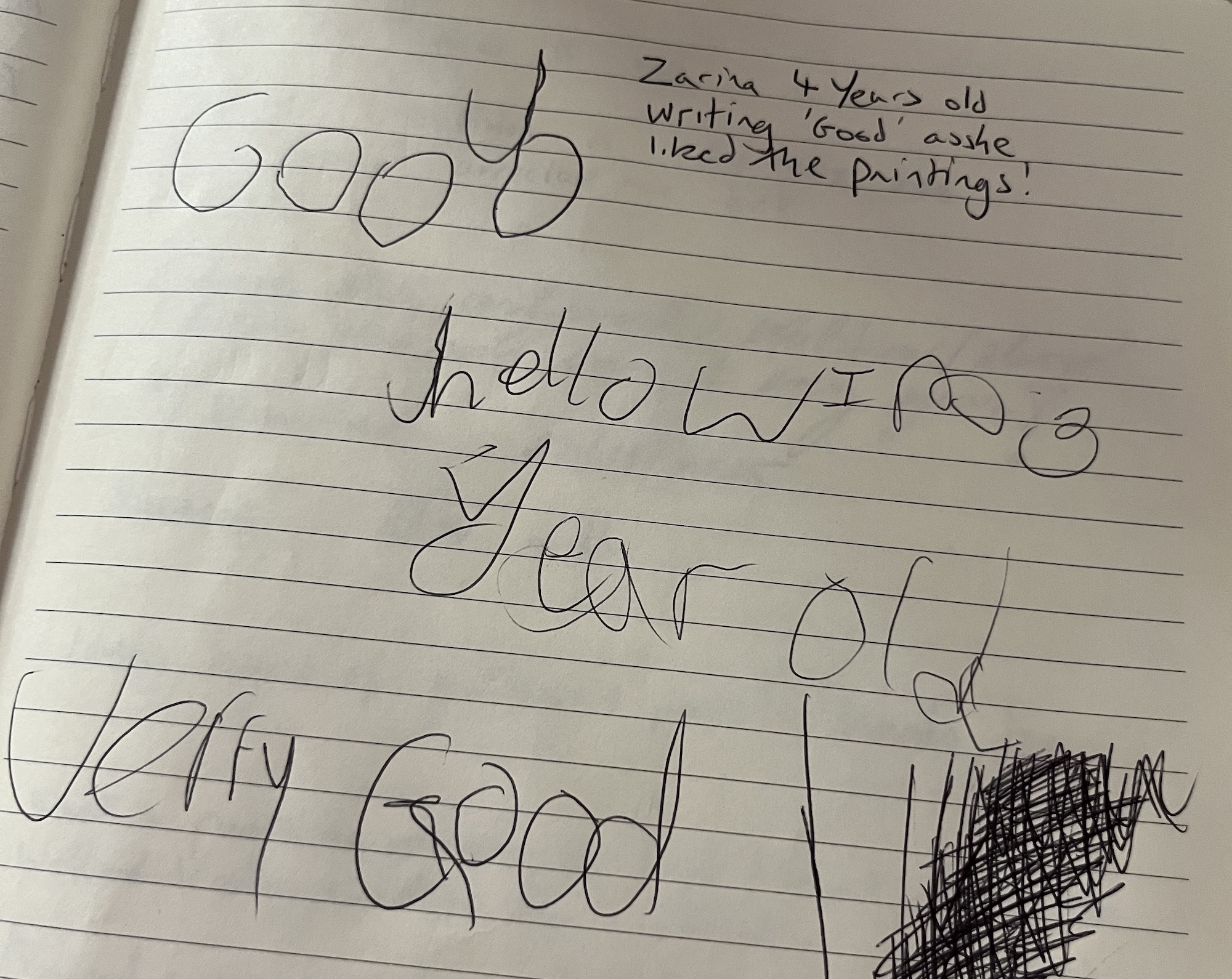
The exhibition clearly struck a chord with families. Visitors wandered in via the library and (Insomnia) café below, often unplanned, often surprised — and stayed. Toddlers became animated. Four-year-olds gave reviews. A 21-month-old was “very excited by the animals”. The guest book filled with illustrations, smiley faces, included first attempts at writing, and comments that were utterly unfiltered and utterly perfect. If we inspired a few future artists / future members along the way, we’ll count that as a major win.
Adults, meanwhile, spoke about variety, quality, and the joy of discovering just how much creative talent exists locally. There was appreciation for the range of media, the layout of the space, and the simple pleasure of being able to spend time with the work — something the library setting made uniquely possible. Several visitors mentioned how refreshing it was to encounter an exhibition woven into everyday life rather than sealed away from it.
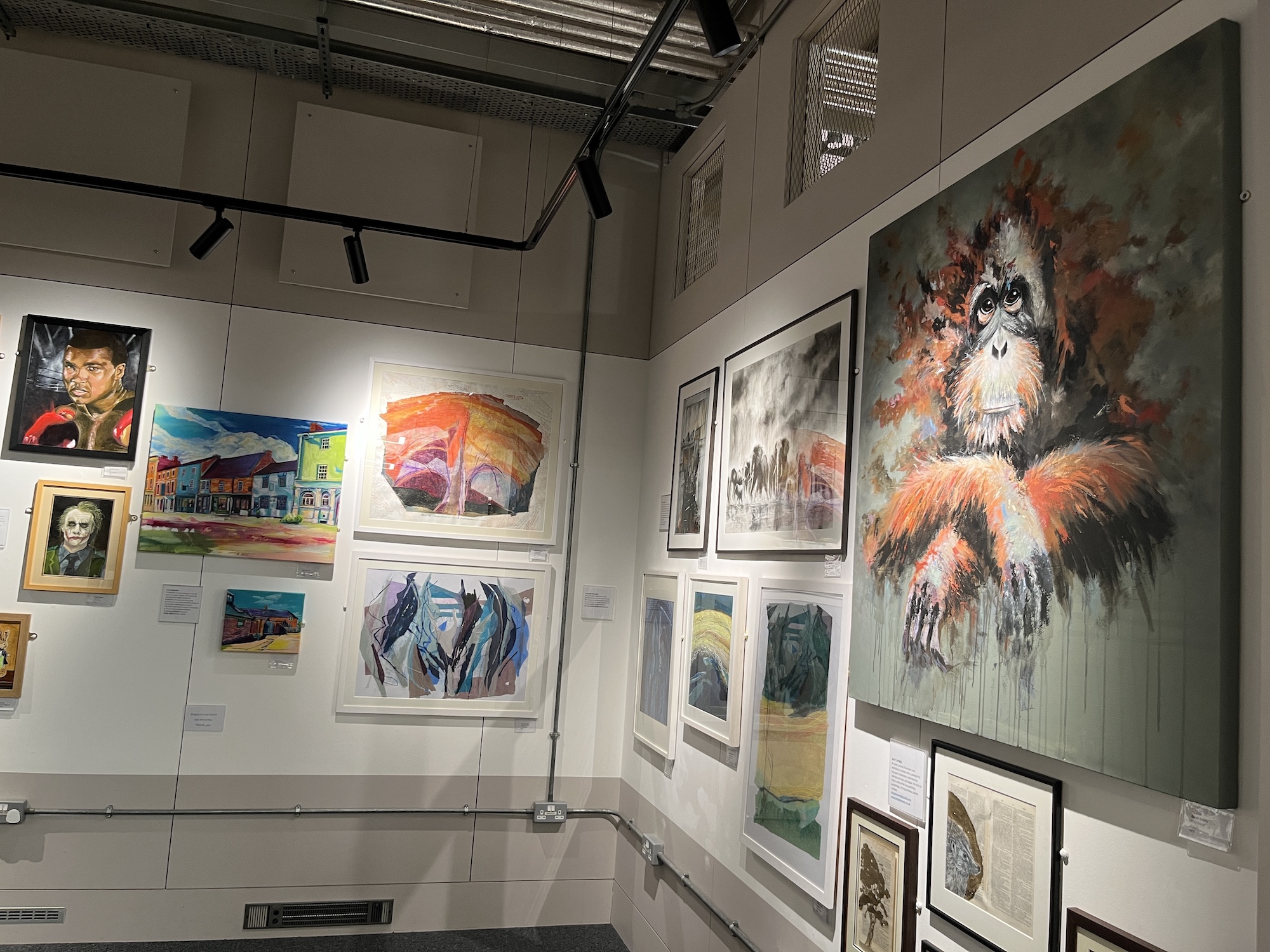
Artists were named. Favourites declared. Works remembered. From Lis Naylor’s Tempest, to Andy Ground’s The Joker, Rosie Jarvis’ Welland Valley Willows (Series), Katy Dynes’ Hedgehog, Vicky Keskeys’ work (including a sold David Bowie piece), and the quiet admiration for Aspects of Stitch, the comments read like a collective conversation between audience and artwork.
One comment summed it up beautifully: “Art is alive and well in Harborough.” Others thanked the organisers, the venue, and the Cluster as a whole — a reminder that exhibitions like this don’t happen by accident. They happen because people show up, collaborate, and put in the (hard) work.
So yes — well done, Cluster.
Not just for what went on the walls, but for what happened in the margins, in the comments, in the moments of connection. The guest book tells a story we couldn’t have written ourselves — and it’s one worth keeping.
…